Could AI Take Your Job? Some Workers in China Already Know the Answer
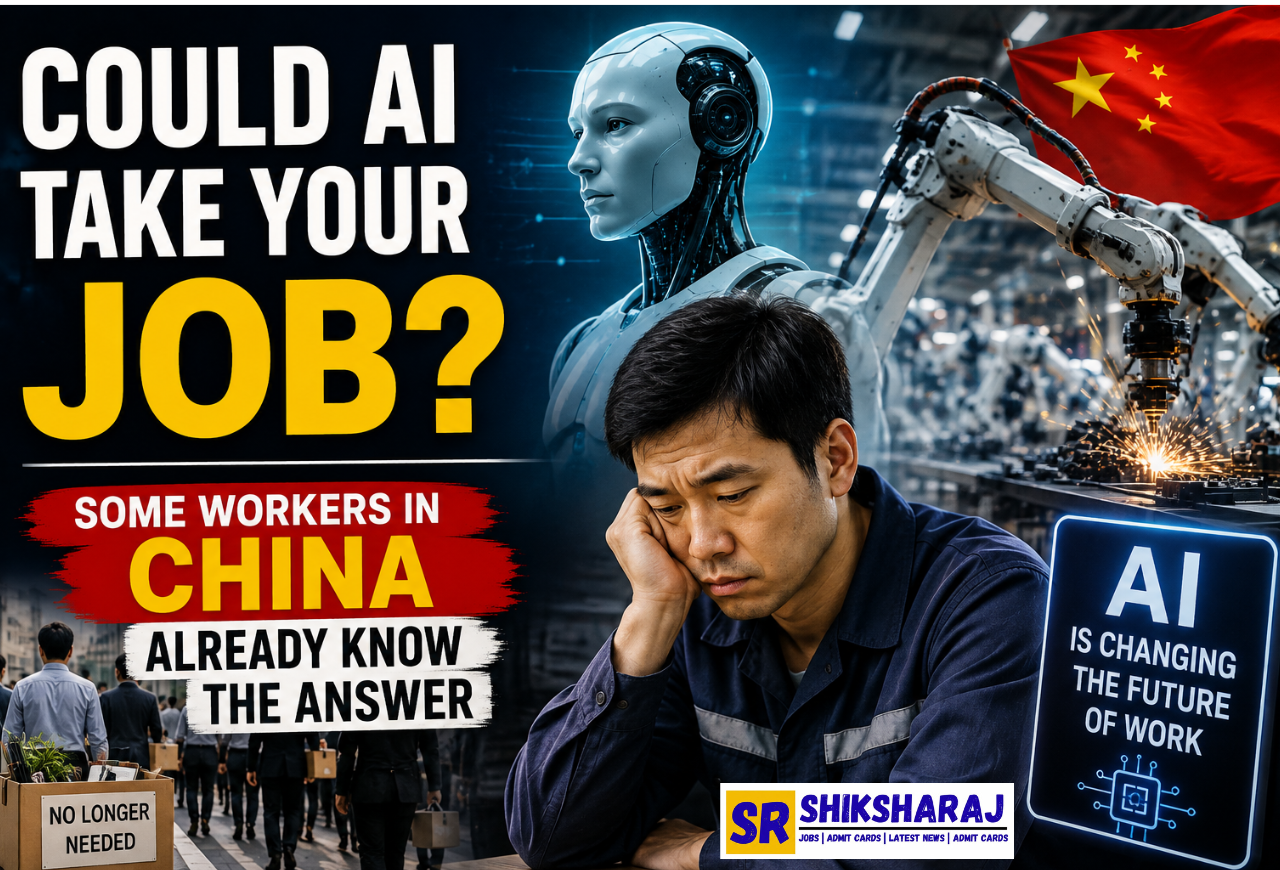
Artificial intelligence is no longer only a future workplace concern. From driverless taxis and automated marketing tools to AI-generated film production, workers in China are already seeing how quickly technology can reduce demand for human labour.
What Is Happening to Workers in China?
China is promoting artificial intelligence as an important engine of economic growth, industrial productivity and global competitiveness. Businesses are being encouraged to integrate AI into manufacturing, transport, entertainment, advertising, software development and public services.
At the same time, employees in several industries say automation is already changing their income and employment prospects. Human taxi drivers in cities where robotaxi services operate face additional competition. Film and advertising professionals report that companies can now produce visual content with fewer people. Programmers, designers, customer-service workers and junior office employees are also discovering that AI can complete part of their routine workload.
Real-World Signs of AI Job Disruption
| Industry | How AI Is Being Used | Possible Effect on Workers |
|---|---|---|
| Taxi and Transport | Driverless taxis use cameras, sensors, maps and AI systems to transport passengers without a human driver. | Lower passenger demand and income pressure for traditional taxi and ride-hailing drivers. |
| Film and Advertising | Generative AI creates images, backgrounds, actors, voices, storyboards and promotional videos. | Smaller production teams and fewer freelance assignments for artists, camera crews and editors. |
| Technology | Coding assistants generate software, test programs, identify errors and prepare documentation. | Reduced demand for some junior developers and pressure on employees to manage more work. |
| Marketing | AI writes advertisements, analyses customers and creates social-media content. | Fewer entry-level content, design and campaign-support positions. |
| Customer Service | Chatbots and voice systems answer common customer questions throughout the day. | Smaller call-centre teams and fewer repetitive support roles. |
| Manufacturing | Smart robots inspect products, move materials and perform repetitive production tasks. | Lower demand for routine factory labour, alongside new demand for maintenance and robotics skills. |
Why China Is an Important AI Employment Test
China has a huge workforce, a large number of university graduates and intense competition for stable employment. Technology that reduces hiring can therefore affect many candidates quickly.
China has the manufacturing capacity, digital infrastructure and policy support required to introduce AI systems and robots at significant scale.
Businesses facing weaker growth or intense competition may use AI to lower costs, shorten production time and reduce the number of employees needed for a task.
National and local authorities view artificial intelligence as a strategic technology. This encourages adoption, but it also creates pressure to manage the social consequences of automation.
Which Jobs Face the Highest AI Risk?
| Job Type | Indicative Risk | Reason |
|---|---|---|
| Data Entry and Routine Administration | High | Work follows predictable digital processes that can be automated. |
| Basic Content Writing | High | AI can quickly create standard descriptions, summaries and promotional copy. |
| Basic Graphic and Video Production | High | Generative tools can produce images, voices, animations and short videos at low cost. |
| Customer-Support Agents | High | Chatbots can answer common and repetitive questions. |
| Junior Software Development | Medium to High | AI can generate routine code, although human review and system knowledge remain necessary. |
| Accountancy and Financial Processing | Medium | Reconciliation, reporting and document processing can be automated, while judgement-based work remains. |
| Teachers and Trainers | Medium | AI can prepare lessons and provide tutoring, but human guidance, motivation and classroom management remain important. |
| Nurses, Care Workers and Therapists | Lower | These jobs require physical care, empathy, trust and direct human responsibility. |
| Skilled Trades | Lower | Electricians, mechanics and technicians work in varied physical environments that are difficult to automate completely. |
AI May Reduce Wages Before It Removes Jobs
Workers often imagine AI disruption as a simple choice between having a job and becoming unemployed. The real effect can be more complicated. When AI allows companies to produce the same amount of work with fewer people, demand for freelancers and junior employees may fall. More applicants then compete for fewer opportunities, giving employers greater power to offer lower wages.
A worker may technically remain employed while facing reduced hours, lower project rates, heavier workloads or fewer promotion opportunities. This makes wage pressure one of the most important indicators of AI disruption.
| Visible Job Loss | Less Visible AI Impact |
|---|---|
| Employee is officially laid off | A vacant position is not filled |
| Department is closed | Graduate recruitment is reduced |
| Role is replaced by software | One worker handles the work of several people |
| Large public layoff announcement | Small cuts occur over several months |
| Permanent job disappears | Freelance rates and working hours decline |
Why Entry-Level Workers May Be Most Vulnerable
Entry-level positions traditionally allow young workers to learn through routine assignments. Junior employees prepare reports, organise information, write basic code, create first drafts and answer common customer questions. These are also the tasks that modern AI systems can perform most easily.
When companies automate beginner-level work, they may still hire experienced specialists but reduce opportunities for graduates. This creates a long-term problem: without junior positions, workers may struggle to gain the experience required to become senior professionals.
Will AI Replace Every Worker?
AI is unlikely to replace every worker in the same way or at the same speed. Most occupations contain a combination of routine, creative, physical, social and judgement-based tasks. AI may automate part of a job while leaving the rest to humans.
For example, an AI system may prepare a financial report, but a qualified professional may still need to verify its accuracy, explain the findings and accept responsibility. A chatbot may answer common questions, while a human handles unusual complaints. A robotaxi may drive on mapped routes, while people remain necessary for maintenance, emergencies and regulatory supervision.
Jobs AI Could Create
Artificial intelligence can create employment in software, semiconductors, cloud computing, robotics, cybersecurity, maintenance, compliance and AI governance. Businesses may also need specialists who can integrate AI safely into existing operations.
The difficulty is that newly created jobs may require different qualifications and may not appear in the same locations where old jobs disappear. A taxi driver cannot immediately become a machine learning engineer, and a junior designer may not automatically qualify for an AI-governance position. Training and transition support are therefore essential.
How Workers Can Protect Their Careers
| Career Action | Why It Matters |
|---|---|
| Learn to use AI tools | Workers who can use AI productively may outperform those who ignore it. |
| Build specialist knowledge | Deep industry knowledge is harder to replace than basic general tasks. |
| Develop human communication skills | Negotiation, leadership, empathy and trust remain difficult to automate. |
| Learn verification and quality control | AI output can contain errors, bias and fabricated information. |
| Combine digital and physical skills | Roles involving technology and real-world problem solving may be more resilient. |
| Maintain a portfolio of work | Evidence of results helps workers compete in a changing employment market. |
| Monitor changes in the industry | Early awareness gives workers more time to learn new tools or move into growing roles. |
What Governments and Companies Should Do
Training should connect directly to available jobs rather than offering general courses with no clear employment path.
Companies should follow labour law, provide proper notice and consider redeployment before replacing employees.
Incentives, apprenticeships and graduate programmes can help preserve pathways for young workers.
Higher productivity should support better wages, shorter working hours and stronger social protection rather than only reducing headcount.
Workers should understand when AI is being used to evaluate performance, distribute work or make employment decisions.
What China’s Experience Means for the Rest of the World
China’s experience provides an early view of how rapid AI adoption can affect a large and competitive workforce. The lesson is not that every country will follow exactly the same path. Labour laws, wages, technology investment and social-security systems differ widely. However, the same economic pressure exists almost everywhere: when a company believes AI can lower costs or increase output, competitors may feel forced to adopt it as well.
This can create an automation race in which individual businesses act rationally while society struggles with lower employment, weaker consumer demand and widening inequality. Governments may therefore need to manage not only the development of AI but also the speed and fairness of its adoption.
The Future May Be Human Plus AI
The strongest career strategy may not be competing directly against artificial intelligence. Instead, workers can learn how to combine human judgement with AI speed. A doctor supported by diagnostic software, a teacher using personalised learning tools, a lawyer checking AI-generated research or a technician maintaining automated machinery may become more productive without becoming unnecessary.
This positive outcome is not guaranteed. It depends on whether companies use AI to support employees or simply reduce labour costs. It also depends on whether workers receive access to training and whether public policy protects people during periods of transition.
Frequently Asked Questions
Is AI already taking jobs in China?
Which workers are most vulnerable to AI?
Can AI affect salaries without removing jobs?
Are creative jobs safe from artificial intelligence?
Will learning AI guarantee job security?
Will AI create more jobs than it removes?
Sources and Further Reading
This article is based on recent public reporting and research about artificial intelligence, automation and employment. Readers can review the original reports through the links below.
Guardian Report Reuters: China AI and Layoffs Reuters: AI and Job Creation