The Central Board of Direct Taxes (CBDT) has officially notified the Income Tax Return (ITR) forms for Assessment Year (AY) 2026-27, bringing important updates for taxpayers across India. These revised forms aim to simplify the filing process, improve transparency, and ensure better compliance with tax regulations. If you are a salaried employee, business owner, or freelancer, understanding the latest ITR forms is essential to file your return correctly and avoid penalties.
Highlights of ITR Forms for AY 2026-27
| Particulars | Details |
|---|---|
| Authority | Central Board of Direct Taxes (CBDT) |
| Assessment Year | 2026-27 |
| Financial Year | 2025-26 |
| Forms Notified | ITR-1, ITR-2, ITR-3, ITR-4, ITR-5, ITR-6, ITR-7 |
| Purpose | Filing income tax returns |
| Filing Mode | Online through Income Tax e-Filing Portal |
| Major Updates | Enhanced disclosures, improved validation rules |
| Applicability | Individuals, HUFs, firms, companies, trusts |
What Are ITR Forms and Why They Matter
Income Tax Return (ITR) forms are official documents used by taxpayers to report their income, deductions, and tax liabilities to the Income Tax Department. Filing the correct ITR form is crucial because it ensures accurate tax calculation and avoids legal complications.
For AY 2026-27, the CBDT has retained the structure of most forms but introduced refinements in reporting requirements. These changes aim to make tax filing more precise and reduce errors during submission.
Read about: RBI Recruitment 2026
Types of ITR Forms for AY 2026-27
ITR-1 (Sahaj)
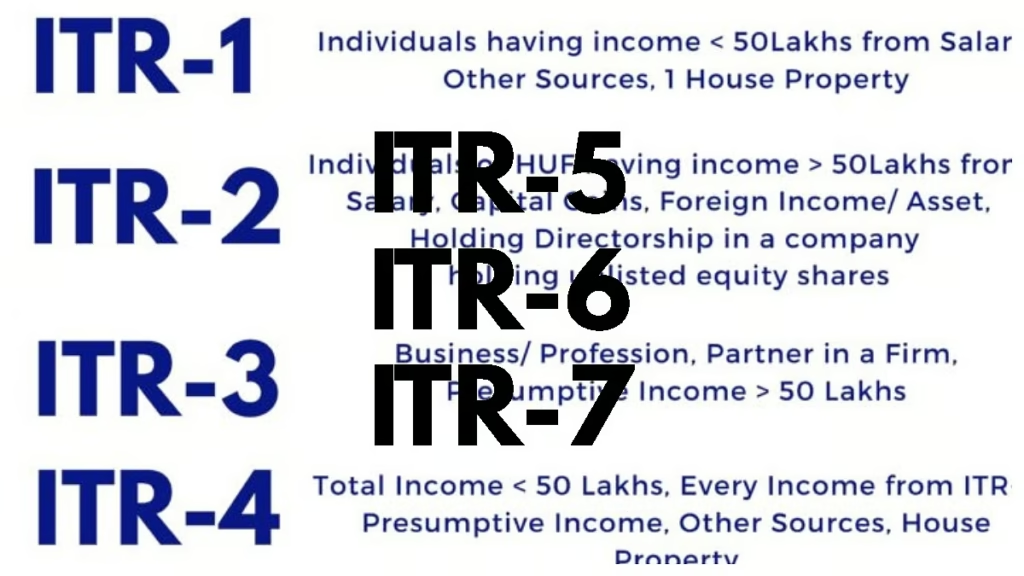
ITR-1 is meant for resident individuals with total income up to ₹50 lakh. It applies to those earning income from salary, one house property, and other sources like interest. The updated form includes better reporting for interest income and deductions.
ITR-2
ITR-2 is suitable for individuals and Hindu Undivided Families (HUFs) who do not have income from business or profession. It includes those with capital gains, foreign assets, or multiple house properties.
ITR-3
ITR-3 is designed for individuals and HUFs earning income from business or profession. The revised version strengthens disclosure norms for profit and loss statements and balance sheets.
ITR-4 (Sugam)
ITR-4 applies to taxpayers opting for the presumptive taxation scheme under sections 44AD, 44ADA, or 44AE. The updated form simplifies reporting for small businesses and professionals.
ITR-5, ITR-6 and ITR-7
These forms cater to firms, LLPs, companies, and trusts. The CBDT has made minor structural improvements to enhance clarity and ensure better compliance.
Major Changes Introduced in AY 2026-27 ITR Forms
The newly notified forms include several important updates. One of the key changes is the enhanced disclosure requirements, which require taxpayers to provide more detailed information about income sources and deductions.
Another significant update is the improved validation system, which helps reduce errors during filing. This ensures that incorrect or incomplete returns are flagged instantly.
The forms also focus on digital reporting and pre-filled data, making it easier for taxpayers to verify information instead of entering everything manually.
Additionally, there is better alignment with new tax regime provisions, allowing taxpayers to clearly indicate their preferred tax regime.
Who Should Use Which ITR Form
Choosing the correct ITR form depends on your income type and category. Salaried individuals with simple income sources can use ITR-1, while those with capital gains or foreign income should opt for ITR-2.
Business owners and professionals must use ITR-3 or ITR-4, depending on whether they follow regular accounting or presumptive taxation.
Companies, partnership firms, and trusts must select ITR-5, ITR-6, or ITR-7, based on their structure.
Filing the wrong form may lead to return rejection or notices from the tax department, so it is important to verify eligibility before filing.
How to File ITR for AY 2026-27
Filing your income tax return has become simpler with the online system. First, visit the Income Tax e-Filing Portal and log in using your credentials.
Next, select the appropriate ITR form based on your income category. The portal will provide pre-filled data such as salary, TDS, and interest income.
After verifying the details, you need to enter additional information, claim deductions, and calculate your tax liability. Once completed, submit the return and proceed with e-verification using Aadhaar OTP, net banking, or other methods.
Timely filing ensures that you avoid penalties and can claim refunds without delays.
Benefits of the Updated ITR Forms
The revised ITR forms for AY 2026-27 offer several benefits to taxpayers. The simplified structure makes it easier to understand and fill out the forms.
The introduction of pre-filled data reduces manual effort and minimizes errors. Enhanced validation checks ensure that incorrect entries are corrected before submission.
The forms also promote greater transparency and compliance, helping the government track income accurately while making the process smoother for taxpayers.
Important Deadlines to Remember
The due date for filing ITR for most individuals is typically 31st July 2026, unless extended by the government. Businesses requiring audit may have a later deadline.
It is advisable to file your return early to avoid last-minute issues and ensure faster processing of refunds.
Also read: NTA GAT-B & BET 2026 Notification Released
FAQ’s About ITR Forms for AY 2026-27
What is the last date to file ITR for AY 2026-27
The expected last date for most individual taxpayers is 31st July 2026, unless extended by the government.
Which ITR form should salaried individuals use
Salaried individuals with income up to ₹50 lakh and simple sources can use ITR-1 (Sahaj), provided they meet all eligibility conditions.